
Buyers looking at Washtenaw and Oakland counties tend to hit the same fork in the road. Ann Arbor pulls them in with the University of Michigan and a dense urban core. Living in South Lyon offers something different, just across the county line.
What it comes down to, practically speaking, is property taxes, lot sizes, and daily time on US-23. Here’s how the two cities actually stack up if you’re setting a budget for a 2026 purchase.
Real Estate Market and Home Prices
The price gap between these two markets is real and significant. In Ann Arbor, the median home value sits around $489,000, with recent median sale prices landing near $445,000. South Lyon tells a different story – recent closed sales show a median sale price of roughly $238,450, with homes spending about 18 days on the market. Entry-level homes keep that closed price median lower, but South Lyon also has new construction and luxury builds that push active list prices higher.
Average Home Prices in Both Cities
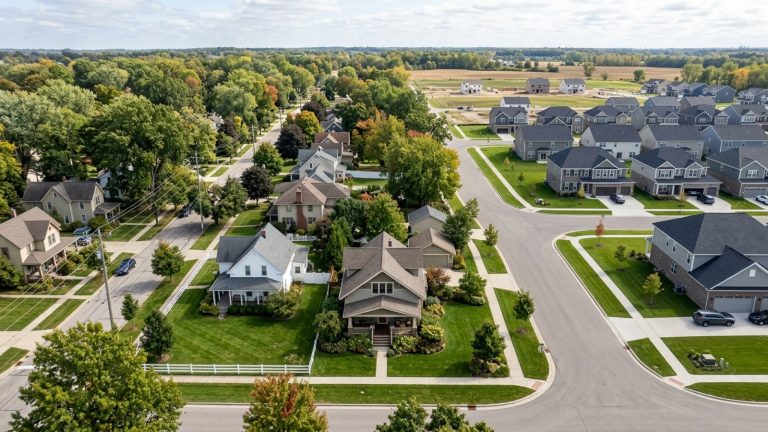
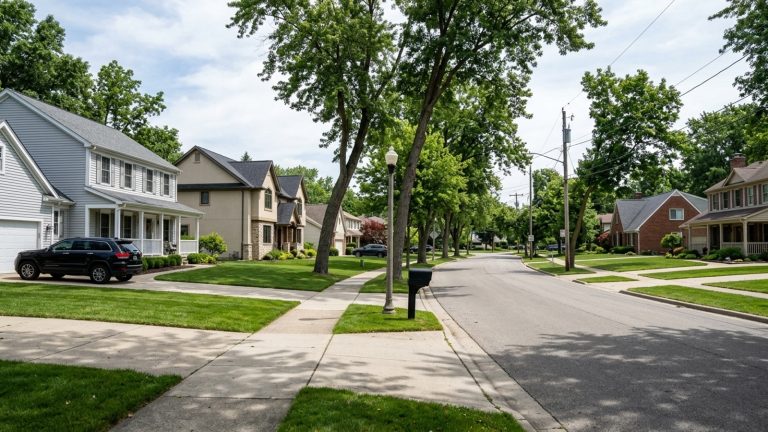
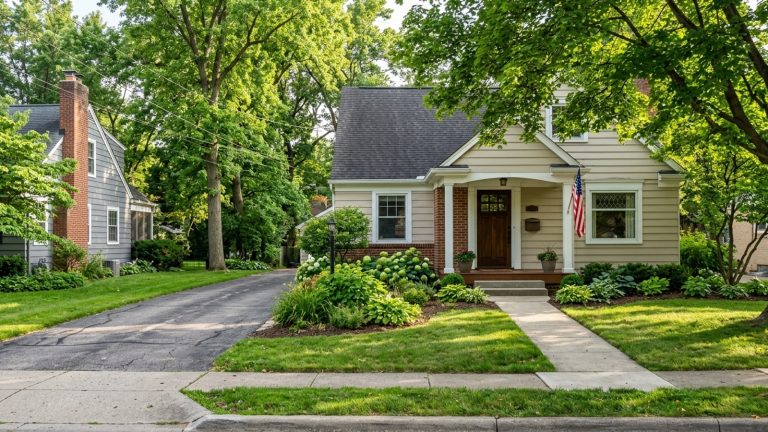
South Lyon covers a wide range of lot sizes and home styles. The downtown area has older bungalows, mid-century ranches, and Colonial-style homes on smaller lots. Move-up neighborhoods like Carriage Club feature Colonials and custom builds on lots ranging from 0.3 to 0.75 acres.
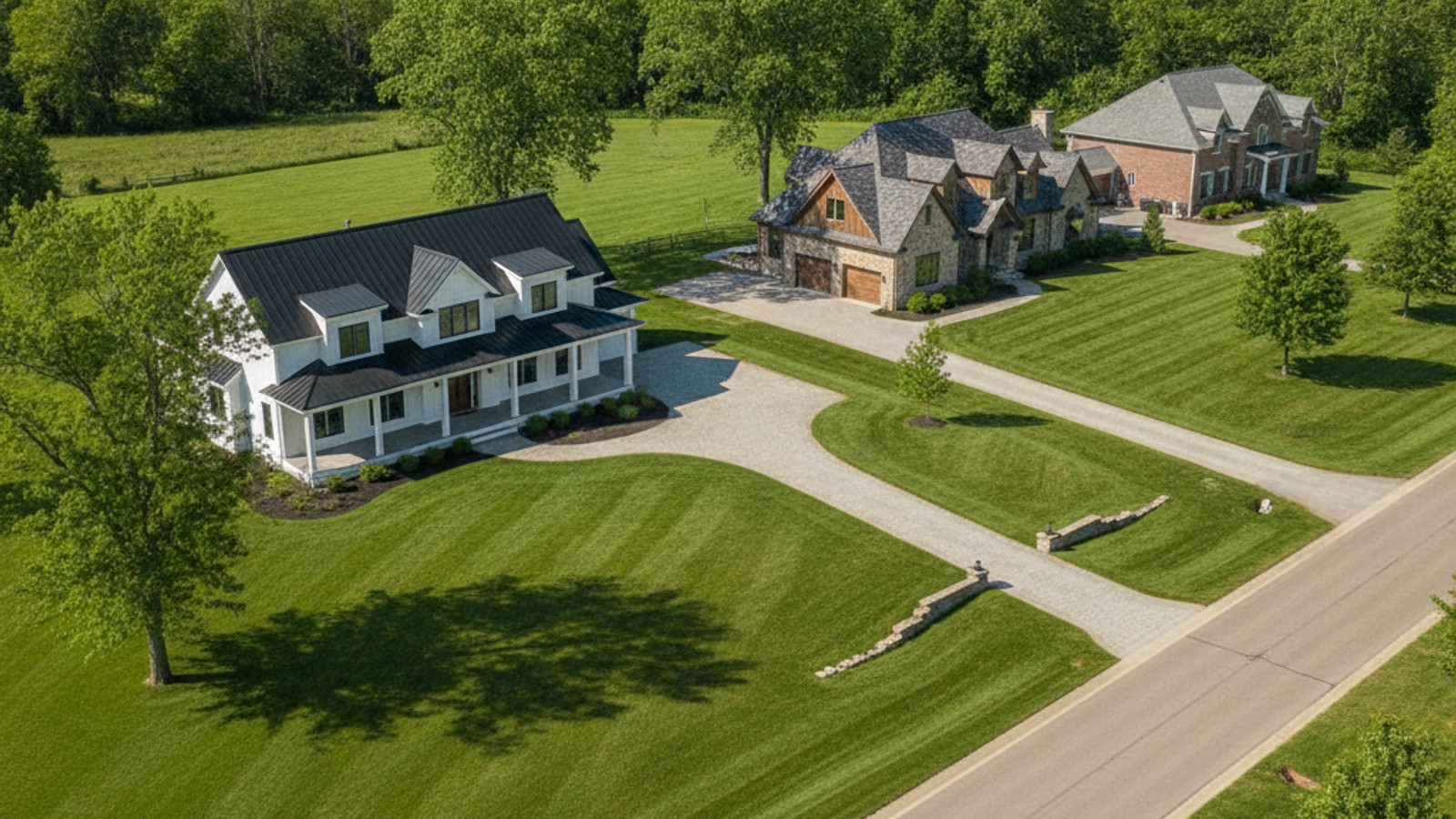
Go further out into Lyon Township, and the properties expand into custom estates, farmhouses, and horse properties on parcels of two to 20 acres or more. Ann Arbor’s inventory runs mostly to historic homes near the city center, along with condos and established subdivisions – generally with smaller lot sizes than you’ll find on the outer edges of South Lyon.
Property Taxes and Affordability
This is where the two counties diverge in a way that actually affects your monthly payment. In Ann Arbor, homestead property owners face a composite rate of approximately 48.32 mills for 2026, producing a median effective tax rate around 1.58%.
South Lyon comes in lower. The Lyon Township portion of the South Lyon Community Schools area taxes homestead properties at 31.2665 mills, resulting in an effective rate between 0.73% and 1.04%. Run those millage rates through your mortgage estimate before you decide what you can afford in either market.
Location, Commute, and Transportation
Getting between these two cities means learning a short list of roads: US-23, M-14, and Pontiac Trail are the main connectors between Oakland and Washtenaw counties. Which route you take shapes your daily travel time and your access to the commercial corridors in between. If you’re planning to live in one city and work in the other, drive both directions during rush hour before you make a decision.
Distance and Drive Times
The two cities are roughly 20 miles apart. Under normal traffic conditions, the drive via US-23 runs about 25 to 30 minutes. That half-hour radius makes it genuinely workable to live in South Lyon and commute to downtown Ann Arbor or the University of Michigan – though you’ll want to account for peak hours and Michigan winters, both of which add time.
Public Transit and Highway Access
Ann Arbor has an established public transit network that covers the downtown core and the university campus. South Lyon is a more traditional suburban and rural community – personal vehicles are the expectation, not the exception.
Getting from South Lyon’s residential subdivisions to US-23 or M-14 does require a short drive. Map that distance from any specific neighborhood you’re considering to the nearest on-ramp. It matters more than people think.
Lifestyle and Local Amenities
Ann Arbor’s daily environment is built around the University of Michigan and everything that comes with it – a dense downtown footprint, extensive commercial districts, entertainment venues, and restaurants. South Lyon is a smaller-scale downtown with local shops and community-based restaurants. It’s a different pace, not a lesser one, but it is genuinely different.
Dining, Shopping, and Entertainment
Downtown Ann Arbor offers blocks of retail, dining, and cultural attractions tied closely to the university environment. You can walk to a wide variety of restaurants and entertainment options from the city center without getting in a car.
Downtown South Lyon runs to a more concentrated selection of local dining and retail. Buyers who want major commercial shopping centers typically drive to neighboring suburban hubs, which is worth factoring in if that’s part of your weekly routine.
Parks and Outdoor Recreation
Both areas have dedicated outdoor spaces and trail networks worth knowing about. In Ann Arbor, Gallup Park provides water access and paved trails along the Huron River, backed by university recreational amenities. South Lyon residents use McHattie Park for local recreation and community events, and the Huron Valley Trail runs through the area with miles of paved pathways for walking and cycling through Oakland County.
Making Your Decision Between the Two Markets
A recent snapshot of South Lyon shows roughly 61 active listings and a median time on market of just 18 days, with average sale-to-list ratios near 99.8%. That’s a competitive market. Don’t mistake the lower price point for a slower one.
Buyers who want larger parcels, lower property taxes, and a quieter pace tend to land in South Lyon and Lyon Township. Those who want immediate access to a major university, dense downtown amenities, and shorter intra-city commutes tend to focus on Ann Arbor. Neither answer is wrong – they’re just different priorities.
One practical note: review the specific property tax millage rates for any home you tour. City versus township boundaries affect your rate more than people expect, and a local agent can walk you through exactly where a given property falls.
Frequently Asked Questions
How much more house can I get in South Lyon, MI for the same budget compared to Ann Arbor?
Buyers generally get more square footage or a larger lot in South Lyon for the same price. Recent data puts South Lyon’s median sale price around $238,450, while Ann Arbor’s sits closer to $445,000. In the outer township areas, South Lyon also offers parcels up to 20 acres.
Are property taxes lower in South Lyon than in Ann Arbor?
Yes. South Lyon homestead properties face a millage rate of 31.2665 mills, producing an effective rate around 0.73% to 1.04%. Ann Arbor homestead properties carry a higher composite rate of approximately 48.32 mills, resulting in an effective rate near 1.58%.
What is the daily commute like from South Lyon to downtown Ann Arbor?
The commute covers roughly 20 miles and typically takes 25 to 30 minutes. Most drivers use US-23. Expect that number to climb during peak rush hour or winter weather.
Is it easier to win a real estate bidding war in South Lyon compared to the Ann Arbor market?
Not necessarily. South Lyon homes sell quickly – a median of 18 days on the market and a 99.8% sale-to-list ratio. Expect real competition and move decisively when you find the right property in either market.
Will a house in South Lyon, MI appreciate in resale value as quickly as one in Ann Arbor?
It depends on the property type and location. Zillow data indicates South Lyon home values increased by 4.5% over the past year, while Ann Arbor saw a 3.6% increase. Both markets show steady appreciation, though Ann Arbor maintains higher overall price points.
How do South Lyon Community Schools compare to Ann Arbor Public Schools for buyers in the area?
The specific boundary lines determine your exact tax rate – for example, the Lyon Township portion of South Lyon Community Schools carries a millage of 31.2665 mills. Review each district’s official boundary maps and state data to compare specific educational programs.